



DevOps Tools
Overload: How DevOpsArk Simplifies Workflows
Modern DevOps environments were built with a simple goal
in mind: move faster, deploy better, and maintain
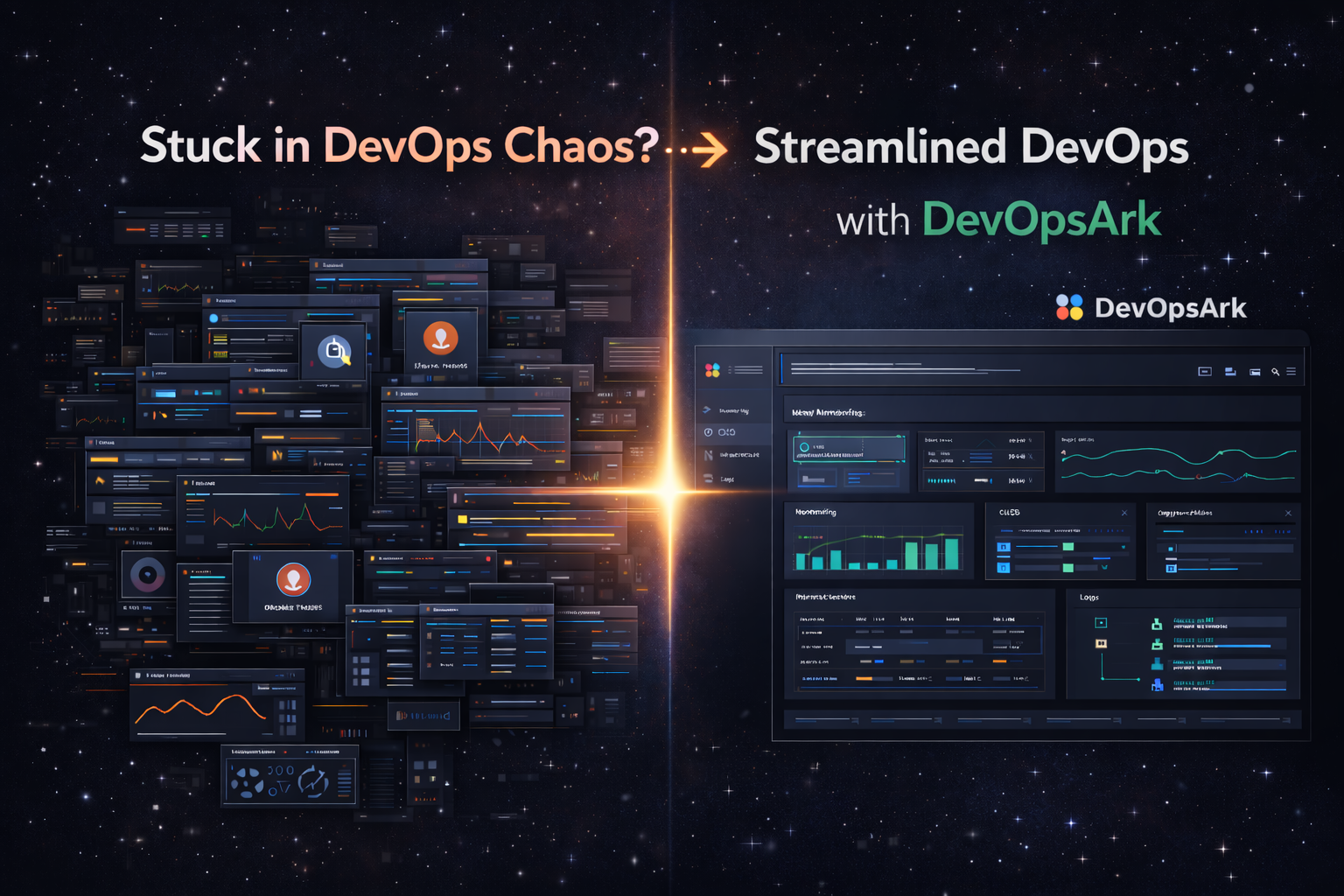
Modern DevOps environments were built with a simple goal in mind: move faster, deploy better, and maintain reliable systems at scale.
To achieve this, teams adopted specialized tools for every stage of the lifecycle—continuous integration, deployment automation, monitoring, logging, security, and infrastructure management. Each tool promised to solve a specific problem, and in isolation, many of them did.
But as these tools accumulated, something unexpected happened.
Instead of accelerating workflows, they began to slow them down.
This shift is subtle at first. It doesn’t come from a single failure or a broken system. It emerges gradually, as teams spend more time navigating tools than actually solving problems. Over time, DevOps environments become fragmented, and engineering efficiency begins to decline.
This is the reality of modern DevOps: not a lack of tools, but a lack of cohesion.
The Breaking Point of Fragmented DevOps
In a typical setup today, an engineer responding to an issue might start with a monitoring alert. To investigate further, they switch to a logging platform. Then they check recent deployments in a CI/CD tool, followed by infrastructure changes in another system.
Each step requires context switching. Each tool presents data differently. None of them tell the complete story on their own.
What should be a straightforward process—understanding what went wrong—turns into a multi-step investigation spread across disconnected systems.
This is where the real cost of tool sprawl becomes visible.
It’s not just about complexity. It’s about time, clarity, and the ability to make decisions under pressure.
When Tools Stop Talking to Each Other
One of the biggest challenges in fragmented DevOps environments is the absence of context.
Metrics may indicate a performance issue, but without knowing what changed in the system, they lack meaning. Logs may capture errors, but without correlation to deployments or infrastructure events, they provide only partial insight.
To bridge these gaps, teams often rely on manual effort—connecting dots, reconstructing timelines, and validating assumptions.
This approach doesn’t scale.
As systems grow and workloads increase, the need for connected, contextual information becomes critical. Without it, even the most advanced tools fail to deliver actionable insights.
Rethinking DevOps as a System, Not a Collection of Tools
The limitations of fragmented tooling have led many teams to reconsider how their DevOps environments are structured.
Instead of asking, “Which tool should we add next?”, the question is shifting to:
“How do we make our systems work together as a whole?”
This shift is not about replacing tools blindly. It’s about creating an environment where workflows are connected, data is contextual, and actions are streamlined.
In other words, it’s about moving from tool-centric DevOps to system-centric DevOps.
Where DevOpsArk Fits In
This is exactly the gap that DevOpsArk is designed to address.
Rather than adding another layer to an already complex ecosystem, DevOpsArk focuses on bringing together the core elements of DevOps into a unified workflow.
Instead of switching between multiple tools, teams can operate within a system where:
- Deployments, infrastructure, and monitoring are connected
- Data flows across components without manual stitching
- Events are contextual, not isolated
- Workflows are streamlined rather than fragmented
The goal is not just consolidation, but clarity.
By reducing the friction between tools and connecting critical workflows, DevOpsArk enables teams to spend less time navigating systems and more time solving real problems.
From Reaction to Understanding
One of the biggest advantages of a unified approach is the shift from reactive debugging to informed understanding.
In fragmented environments, engineers react to alerts and then begin the process of gathering context. In a unified system, context is already present. Signals are connected, changes are visible, and the relationship between events is easier to interpret.
This doesn’t just improve response times—it changes how teams operate.
Instead of constantly firefighting, they can focus on improving systems, optimizing performance, and delivering value.
Simplifying Without Losing Power
A common concern when moving away from multiple tools is the fear of losing flexibility or control.
However, simplification does not mean reduction in capability.
It means removing unnecessary friction.
A well-designed unified platform retains the power of individual tools while eliminating the overhead of managing them separately. It provides consistency without limiting functionality, and structure without sacrificing flexibility.
This balance is what allows teams to scale effectively.
The Future of DevOps Is Cohesion
As DevOps continues to evolve, one thing is becoming increasingly clear:
Success is no longer defined by how many tools a team uses, but by how well those tools work together.
Fragmentation slows teams down. Context gaps create confusion. Manual effort introduces delays.
Cohesion solves these problems.
Platforms like DevOpsArk represent a shift toward environments where systems are designed to be interconnected from the start—where workflows are seamless, and information is inherently contextual.
Conclusion
The challenges faced by modern DevOps teams are not the result of poor tooling, but of disconnected systems.
Tool sprawl has introduced complexity that undermines the very goals DevOps was meant to achieve. Addressing this requires more than adding new tools—it requires rethinking how DevOps environments are structured.
By focusing on integration, context, and streamlined workflows, teams can move beyond fragmentation and regain the efficiency they set out to achieve.
And in that transition—from scattered tools to cohesive systems—platforms like DevOpsArk play a critical role in bringing clarity back to DevOps.